

Library
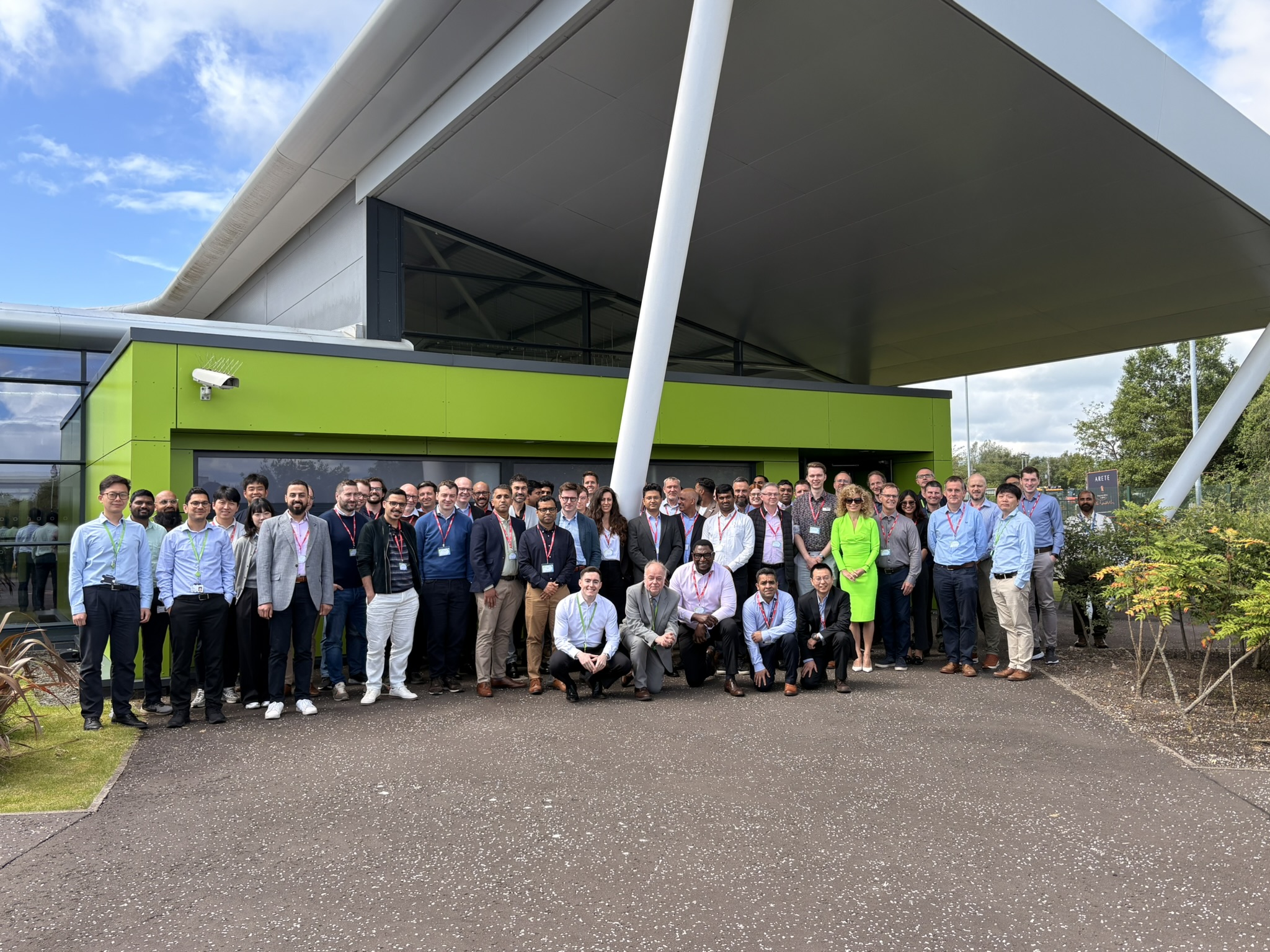
The theme for this session of the 2026 HVDC Operators’ Forum was Big Picture Strategic Planning and the presentations on this theme are listed below.
- Clean Power 2030 and Beyond by Laura Schade, DESNZ
- Big Picture Resilience by Robert Keast, Carbon Trust
- HVDC Technology- International Trends and Opportunities by Ben Marshall, The National HVDC Centre
- VSC HVDC Controls – Gaps and Possible Ways Forward – Results from the ‘Evolution of VSC HVDC Controls Project’ by Mike Barnes, University of Manchester
Slides we have permission to share for this session are included within the downloadable file.
The theme for this session of the 2026 HVDC Operators’ Forum was Technology Development and the presentations on this theme are listed below.
- Regulatory and Policy Aspects of the Meshed DC Grid by Biljana Stojkovska, Hitachi Energy
- Control & Protection Developments to Facilitate Future Multi-Terminal HVDC systems by Li Zou, GE Vernova
- Multi-vendor HVDC: Trends, Experiences, and Ongoing Development by Fred Page, Mitsubishi Electric
- Superconducting Fault Current Limiters for HVDC Grids by Alberto Bertinato, SuperGrid Institute
Slides we have permission to share from this session are included within the downloadable file.
The theme for this session of the 2026 HVDC Operators’ Forum was Lessons from Owners and Operators and the presentations on this theme are listed below.
- Preparing for Day One: Building Operational Readiness During Construction by Ian Reed, NeuConnect
- Recent Developments from the Moyle Interconnector by Vahid Sabzpoosh, Mutual Energy
- Lessons from operating the CMS link by Cameron McHardy, SSEN Transmission
- FIFA – extending the life of the UK’s first HVDC interconnector by David Monkhouse, National Grid Ventures
- Lessons from operating Greenlink by Matthew Gibson, Greenlink
- Learnings from Sofia windfarm by Chris Smith, RWE
Slides we have permission to share from this session are included within the downloadable file.
The theme for this session of the 2026 HVDC Operators’ Forum was De-risking Integration and the presentations on this theme are listed below.
- EMT Model Requirements for Plant Connections in EirGrid and SONI Systems by Sebastien Dennetiere, RTE international & Treisa Sahaya, EirGrid
- Network Reduction Techniques for Interaction Analysis by Diptargha Chakravorty, Siemens Energy
- TO experiences of de-risking HVDC integration by Afshin Pashei, NGET
- System Operator Perspectives on the Future use and Operation of HVDC Technology by Ankur Majumdar, NESO
- HVDC Supervisory Control Technology from the System Operator’s Perspective by Gumin Kwon, KEPCO
Slides we have permission to share from this session are included within the downloadable file.
Abstract— The expansion of offshore wind generation is increasing the need for interoperable and resilient HVDC transmission systems. While vendor‑agnostic control architectures proposed by the Aquila project have enabled unbalanced operation in multi‑terminal HVDC networks, significant challenges remain for offshore applications, particularly in hybrid bipolar configurations combining links with and without Dedicated Metallic Returns (DMRs). These challenges are amplified under N‑1 contingencies and when bipolar offshore converters operate in islanded mode forming asymmetric AC networks and power flow with respect of each pole. This paper investigates the control challenges associated with connecting offshore wind farms to rigid bipolar HVDC systems under simultaneous AC asymmetry of network impedance and power infeed between poles and DC‑side unbalance of the transfer network. Emphasis is placed on maintaining neutral‑to‑earth voltage and current within acceptable limits in the absence of a DMR, while preserving power transfer capability and peer‑to‑peer redundancy between parallel converters. A dedicated control strategy for bipolar offshore HVDC stations operating under islanded conditions is proposed, enabling stable unbalanced DC operation while accommodating asymmetric AC power generation and offshore network topology variations without violating AC or DC operating constraints. The proposed control strategy is validated in EMT simulations within RSCAD/RTDS environment. The tested cases include point-to-point rigid bipolar HVDC connected offshore windfarm, where comparison against library Virtual Synchronous Machine (VSM) – Voltage Source Converter (VSC) control of RSCAD, and a 5-terminal multi-purpose HVDC grid with a hybrid of full- and rigid- bipolar schemes subject to loss of pole end. All results showcase the feasibility of managing neutral voltage/current in various steady scenarios under both balanced and unbalanced HVDC operation.
Updated on 18th May 2026. All copyrights reserved by the National HVDC Centre